Lake Winnipesaukee Fishing Spot
- County: Belknap County/Carroll County
- Acreage: 44422
- Public Fishing: Yes
- Mean Depth: 43'
- Max Depth: 180'
- Elevation: 503'
- Website: http://www.wildlife.state.nh.us/Newsroom/News_2007/News_2007_Q3/LMBV_Found_in_Winni_082807.html
- Last Modified By: kash87 on 04/24/21 09:40 AM
- Ask about Lake Winnipesaukee in our Fishing Forums
Photos


















Fish Species
Comments
-
Have you fished at Lake Winnipesaukee? Be the first to comment on this fishing spot.
Lake Winnipesaukee Description
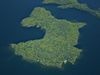
Lake Winnipesaukee is the largest lake in New Hampshire. It is approximately 21 miles (34 km) long (northwest-southeast) and from one to nine miles (1.6 to 15 km) wide (northeast-southwest), covering 69 square miles (180 km²) (71 square miles when Paugus Bay is included),with a maximum depth of 212 feet (64.6 m).
The lake contains at least 253 islands, half of which are less than a quarter-acre in size and is indented by several peninsulas, yielding a total shoreline of some 288 miles (463 km). The driving distance around the lake is 63 miles (101 km). It is 504 feet (153 m) above sea level. Winnipesaukee is the third-largest lake in New England after Lake Champlain and Moosehead Lake.
Outflow is regulated by the Lakeport Dam (in Lakeport, New Hampshire) on the Winnipesaukee River.
Largemouth Bass Virus Found in Lake Winnipesaukee
CONCORD, N.H. - Bass sampled this summer from Lake Winnipesaukee have tested positive for largemouth bass virus (LMBV), with initial testing showing LMBV to be present in a sample of smallmouth bass. The infected fish were collected as part of the Winnipesaukee bass tagging study being conducted by the New Hampshire Fish and Game Department. Previously, LMBV had not been detected in New Hampshire; Fish and Game biologists have been testing for the virus since 2006.
"Finding largemouth bass virus in smallmouth bass is not surprising, as this virus is known to be carried by other fish such as smallmouth bass, pickerel and some sunfish species," said Dr. Joel Bader, N.H. Fish and Game Fish Pathologist. "As we continue to test more bass from Lake Winnipesaukee, it is likely that we will find largemouth bass virus in largemouth bass, as well."
Largemouth bass virus is one of more than 100 naturally occurring viruses in fish. Fish with largemouth bass virus are safe to handle and eat, as the virus does not infect warm-blooded animals, including humans.
Presence of the virus in a fish population does not necessarily mean fish will develop LMBV disease, which can cause them to die or show signs of being in poor health. Most fish carrying largemouth bass virus appear completely normal, but largemouth bass kills sometimes result in waters that test positive for LMBV. These fish kills generally occur during the summer months, indicating that warmer water temperatures may be a factor. In cases where the virus has triggered disease, dying bass may be near the water surface and have difficultly swimming and remaining upright. The virus attacks the swim bladder, sometimes causing bass to lose their equilibrium and appear bloated. Largemouth bass between 12 and 15 inches appear to be most susceptible to the disease. The occurrence of lesions or black spots is not a sign that a fish has LMBV.
The virus appears to result in disease when largemouth bass are stressed -- warm water temperatures, low oxygen, poor water quality, and frequent handling can increase the chance that fish may get the disease. Scientists are unsure as to how the virus is transmitted or how it develops into a disease. There is currently no cure or preventative for LMBV, and it can live in water for up to seven days. It is known that the virus may be transmitted through water, by fish consuming infected prey, or through direct and indirect contact in boat live wells.
No evidence currently exists that the virus has caused long-term impacts to a fishery; some data indicate that an infected fishery will recover over a period of years.
"Based on the information we have about the virus, it is unlikely that largemouth bass virus poses a serious threat to the long-term health of New Hampshire's bass resources," said Gabe Gries, N.H. Fish and Game fisheries biologist and Warmwater Project Leader. "However, because the virus can sometimes kill or negatively impact largemouth bass and can be spread or influenced by anglers, it is important to test fish to learn where the virus is present in New Hampshire, inform anglers about the virus and try to minimize its spread.
"It is of the utmost importance for anglers to help keep this virus from spreading by cleaning their equipment after use and by not transferring fish, including baitfish, from one waterbody to another," added Gries.
Anglers can help minimize the impact and spread of largemouth bass virus by following these suggested guidelines:
Drain water from bilge and live wells and clean boats, trailer and other equipment between fishing trips with a solution of bleach to water (1:100 ratio) and let air-dry.
Use a solution of bleach to water (1:100 ratio) to clean live wells and let air-dry.
Never transfer fish or fish parts from one body of water to another. In fact, New Hampshire law prohibits transfer of live fish from one waterbody to another.
Do not release live bait into waterbodies.
Handle bass as gently as possible.
During times of high water temperatures, minimize stress to fish as much as possible.
Conduct fishing tournaments during cooler weather, so fish caught will not be as stressed.
Reduce daily bass tournament bag limits or use a "paper format" during times of high water temperatures.
Report dead or dying fish to the N.H. Fish and Game Department.
Educate other anglers about LMBV.
"It is likely that the virus is or will soon be present in other waterbodies in New Hampshire," said Dr. Bader. "We will soon be expanding our testing for this virus in other waters, and ask the public for their cooperation in reporting any fish kills, particularly those involving bass."
Largemouth bass virus was first detected in Florida in 1991 and gained national attention in 1995 when it caused a largemouth bass kill in South Carolina. The virus was originally thought to be restricted to the southern U.S., but it has recently been detected in some Northeastern states, including Vermont (Lake Champlain) and Connecticut.
For more information on LMBV in New Hampshire, click here, or contact Dr. Joel Bader, Fish Pathologist, New Hampshire Fish and Game Department, Region 2, 200 Main Street, New Hampton, NH 03256l; 603-744-5470; jbader@nhfgd.org.
The New Hampshire Fish and Game Department is the guardian of the state's fish, wildlife and marine resources and their habitats.
Lake Winnipesaukee is the largest lake in New Hampshire. It is approximately 21 miles (34 km) long (northwest-southeast) and from one to nine miles (1.6 to 15 km) wide (northeast-southwest), covering 69 square miles (180 km²) (71 square miles when Paugus Bay is included),[1] with a maximum depth of 212 feet (64.6 m).